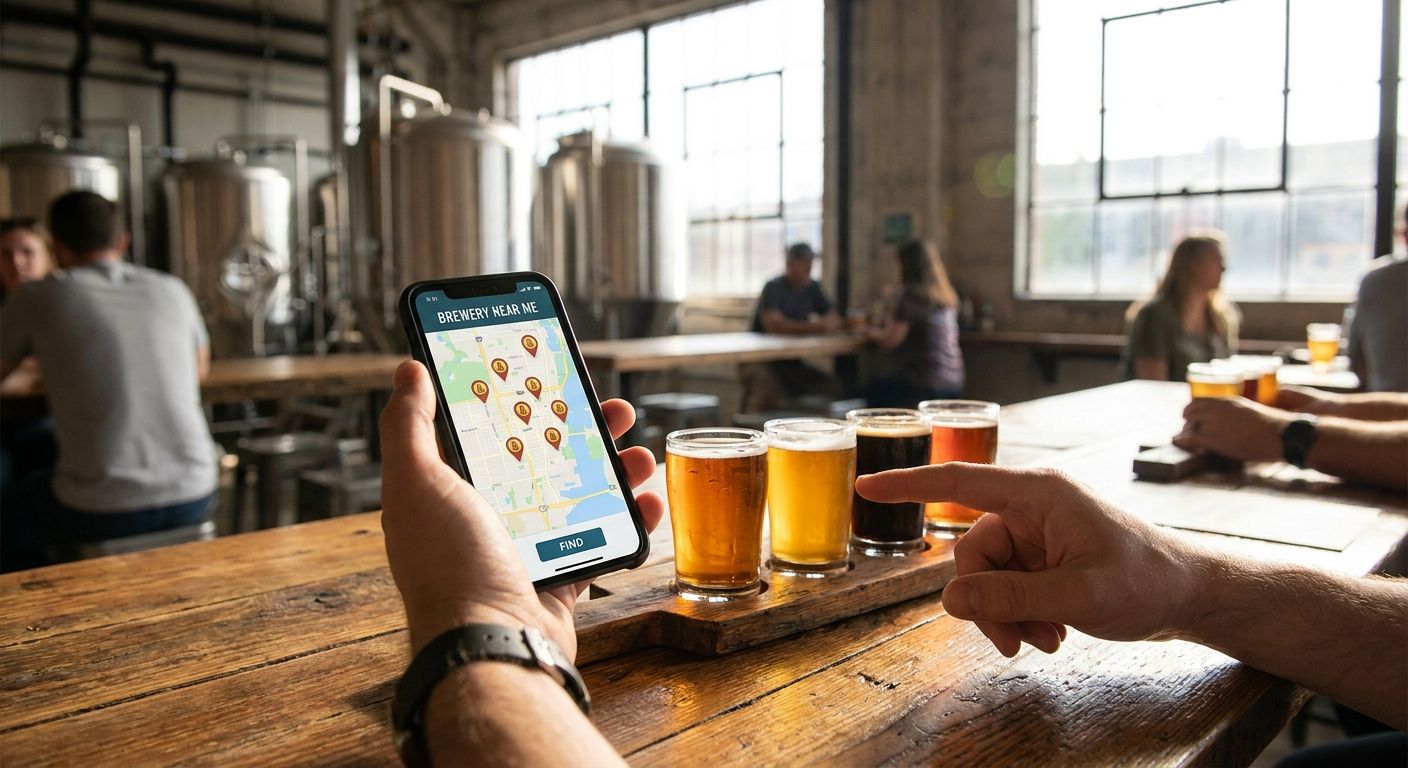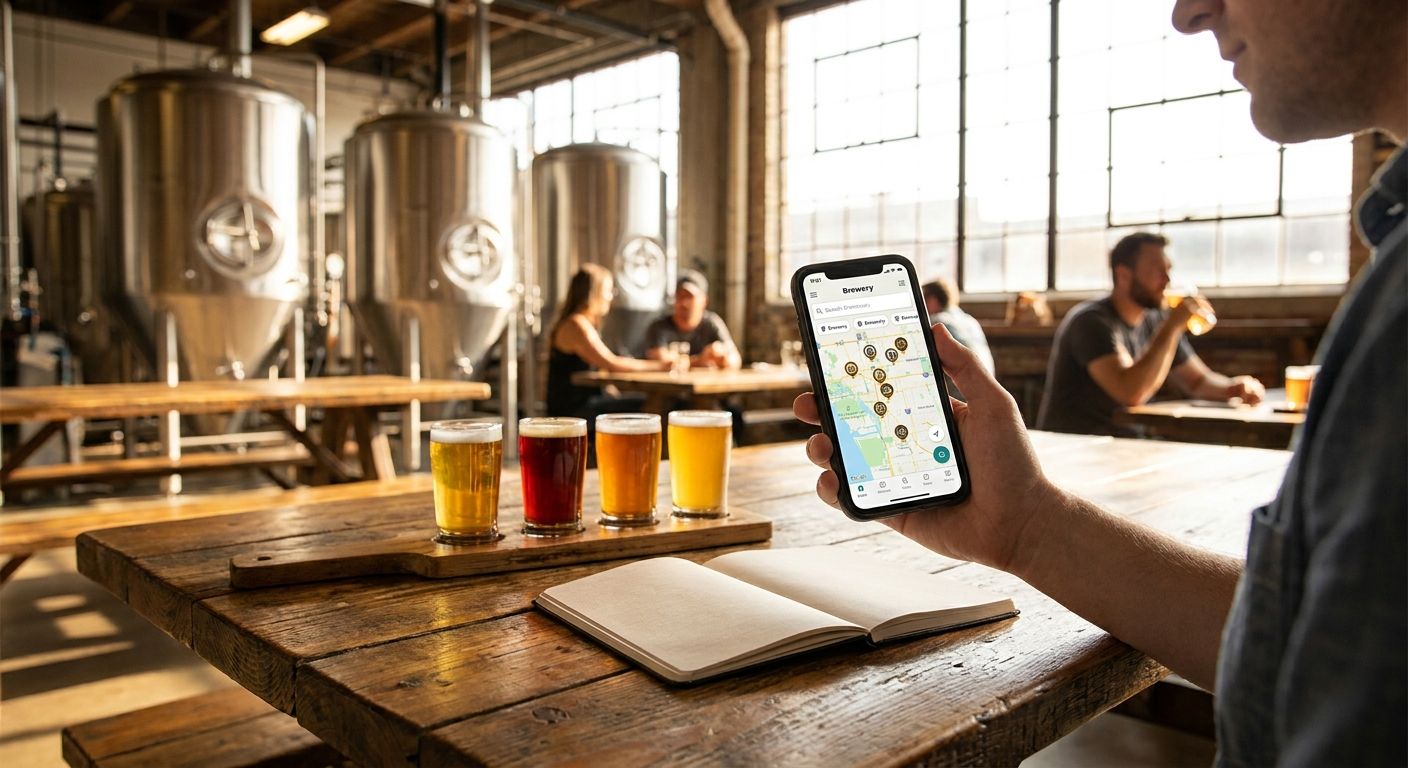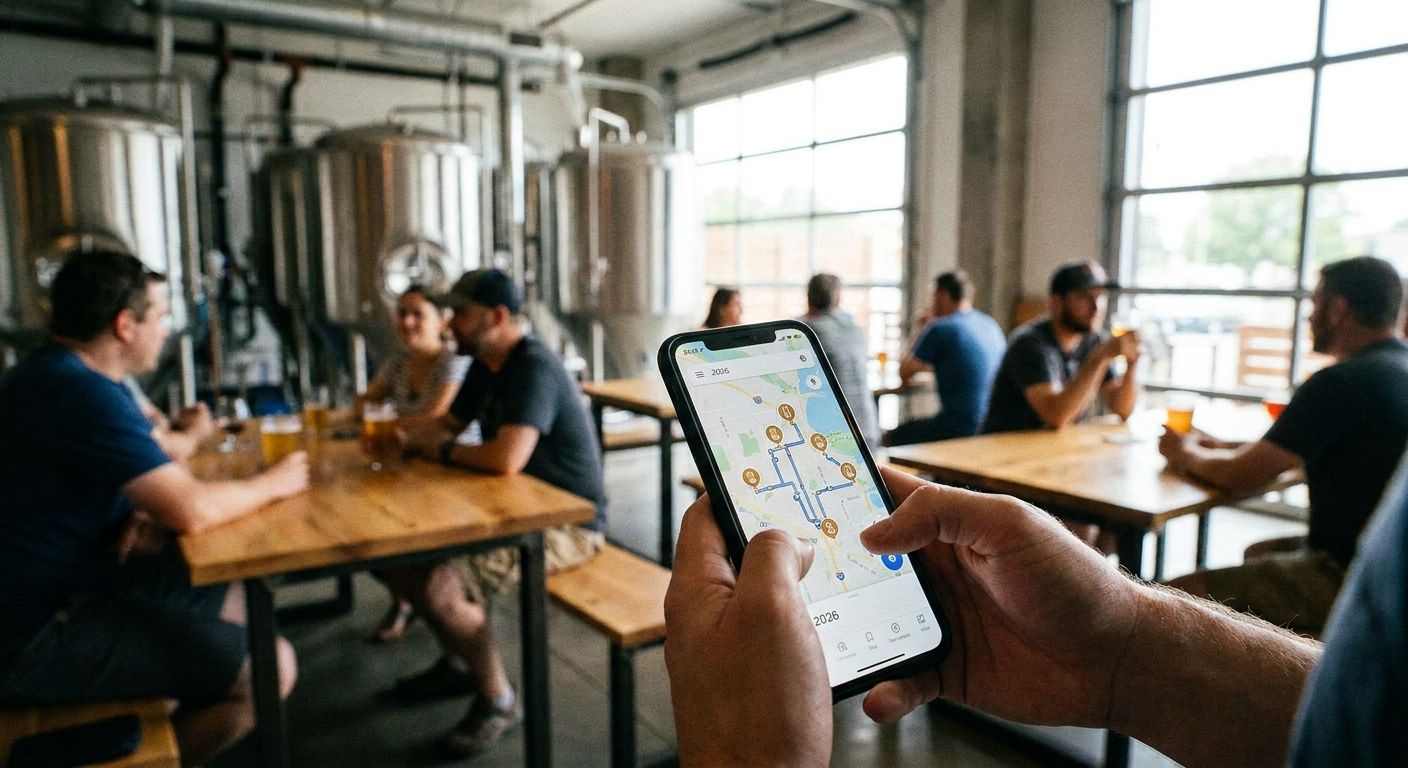
Picking a microbrewery locator app in 2026 comes down to what you actually want to find: a brewery's GPS pin, a check-in feed, a live tap list, or a beer that's been federally cleared but hasn't hit a shelf yet. Best overall: Untappd. Best for tracking new releases before shelves: Hopgrail. Best free data source for developers: Open Brewery DB.
- Untappd wins as the general-purpose microbrewery locator app for check-ins and crowd-mapped brewery pins.
- Hopgrail is the pick for tracking beers at the federal filing stage, before they reach shelves in 2026.
- Open Brewery DB is the developer-facing option: a public API with no app layer.
- TapHunter surfaces live tap lists at participating bars and breweries.
- BeerMenus tracks retailer and bottle shop stock, not brewery locations.
Why this matters
Most microbrewery locator apps run on crowd submissions: a brewery shows up once someone checks in or manually adds it. That works fine for breweries that have been open for years. It fails for anything new, because there's a gap between a brewery filing federal paperwork and a stranger logging a check-in there.
Every US beer label has to clear a Certificate of Label Approval (COLA) filing with the Alcohol and Tobacco Tax and Trade Bureau (TTB) before it ships across state lines. That filing exists weeks or months before most consumer apps ever register the beer. Hopgrail reads directly off that federal record instead of waiting for a check-in.
That's the real split in this category in 2026: apps built on social data versus a tracker built on filed federal data. Pick based on which gap you're trying to close.
What makes the best microbrewery locator app
- Database breadth — nationwide brewery coverage, not just a few metro areas
- Location accuracy — verified addresses, not stale or duplicate pins
- Update cadence — how fast a new brewery or release actually appears
- Data source — crowd-submitted check-ins versus official federal or business records
- Developer access — whether the data is queryable via an open API, not locked to one app
- Scope — brewery locator, tap list, or retail inventory; these are three different jobs
Microbrewery locator apps at a glance
| App | Best for | Standout feature | Key limitation |
|---|---|---|---|
| Hopgrail | New-release tracking via TTB filings | Reads beers straight off filed federal labels | Not built for real-time GPS check-ins |
| Untappd | General social brewery locator | Crowd-sourced check-ins and brewery pins | Brewery listings lag official permit records |
| Open Brewery DB | Developers building locator tools | Structured, nationwide US brewery dataset | No consumer app, API access only |
| TapHunter | Finding live tap lists near you | Menu boards from participating venues | Coverage depends on venue opt-in |
| BeerMenus | Checking bottle shop and retail stock | Retailer inventory search | Retail-focused, not a brewery locator |
1. Hopgrail: best microbrewery locator app for tracking new releases before shelves
Hopgrail publishes newly filed TTB beer label approvals alongside a brewery directory and a can-scanning tool, so a hunter sees what's been cleared before a retailer ever stocks it. The register is read off filed artwork, not guessed from a check-in feed.
Hopgrail pros:
- Surfaces beers at the filing stage, ahead of retail and check-in data
- Brewery directory built from federal registration records, not crowd submissions
- Can-scanning tool ties a physical can back to its filed label
Hopgrail cons:
- Not designed for real-time "breweries near me" GPS browsing
- A filing doesn't guarantee a release date; some beers file and never ship
- No social feed, ratings, or check-in layer
Best for: hunters who want the earliest signal on a new beer, not turn-by-turn directions to a taproom.
Verdict: Bookmark it for release tracking, pair it with a mapping app for the drive.
2. Untappd: best for social check-ins and crowd-mapped brewery locations
Untappd is a check-in app where users log beers as they drink them, and those check-ins double as a crowd-mapped brewery locator. It's the closest thing to a default in this category for casual use.
Untappd pros:
- Large, active user base logging check-ins nationwide
- Ratings and personal drinking history attached to each brewery
- Works as an informal locator through venue check-ins
Untappd cons:
- Brewery listings depend on someone checking in first, which lags actual openings
- A check-in doesn't confirm a brewery's federal licensing or filing status
- The social feed can bury a simple lookup
Best for: casual hunters who want ratings and a drinking log alongside brewery discovery.
Verdict: Install it as the daily-driver app.
3. Open Brewery DB: best for developers who need raw brewery location data
Open Brewery DB is a public API returning US brewery name, address, and type as structured data. It's a dataset, not a consumer-facing microbrewery locator app.
Open Brewery DB pros:
- Structured, queryable output for anyone building their own tool
- Nationwide coverage instead of a handful of metro markets
- No app install needed to pull data directly
Open Brewery DB cons:
- No consumer interface — you need to build one
- No new-release or federal filing data included
- Requires basic API or coding familiarity to use
Best for: developers building a locator feature or map overlay of their own.
Verdict: Use it if you're building something, skip it if you just want to browse.
4. TapHunter: best for finding live tap lists at bars and breweries
TapHunter shows menu boards for participating bars and breweries, so a hunter can check what's actually pouring before showing up.
TapHunter pros:
- Menu-level detail beyond "a brewery exists here"
- Useful for planning a taproom crawl in advance
- Covers non-brewery venues too, like bars and restaurants pouring craft taps
TapHunter cons:
- Coverage depends entirely on venue opt-in — unlisted spots show nothing
- Doesn't track new label filings or upcoming releases
- Menu data is only as current as the venue's last update
Best for: planning a taproom crawl where you want to know what's on tap before arriving.
Verdict: Situational — strong when your target venues participate, dead weight when they don't.
5. BeerMenus: best for checking bottle shop and retailer stock
BeerMenus is a search tool for beer menus at bars and inventory at bottle shops and retailers. It's a retail-inventory tool wearing a beer-app skin, not a brewery locator.
BeerMenus pros:
- Covers the retail-inventory angle most locator apps skip
- Useful for hunting a specific bottle or can release
- Straightforward search by beer name or store
BeerMenus cons:
- Retail-focused, not a brewery locator
- No federal filing or label-approval data
- Coverage skews toward retailers that actively participate
Best for: hunters chasing a specific can at a specific store, not finding a new brewery to visit.
Verdict: Backup tool, not a primary locator.
How we ranked
The order above tracks the criteria listed earlier: database breadth, whether the data comes from a federal record or a crowd submission, how fast new entries show up, and whether the data is open to developers. Hopgrail and Open Brewery DB rank on data source and openness; Untappd and TapHunter rank on real-world usage and venue-level detail; BeerMenus ranks on a narrower retail scope.
Check the register before you drive
See which beers cleared TTB filing before they reach shelves.
Which microbrewery locator app should you choose?
If you want one app for daily use, Untappd stays the default microbrewery locator app in 2026 — check-ins, ratings, and a large crowd-mapped brewery base cover most casual trips. If your goal is finding a beer before anyone else even knows it exists, Hopgrail's federal filing tracker gets there first, because it's reading off the docket instead of waiting for a stranger's check-in. If you're building your own tool, start with Open Brewery DB's raw data and skip the consumer apps entirely.
“A beer can clear its federal filing months before anyone logs a check-in for it.”
FAQ
What's the best microbrewery locator app in 2026?
Untappd is the best general-purpose microbrewery locator app for check-ins and crowd-mapped brewery locations. Hopgrail is the better pick if you want to track new beers at the federal filing stage before they reach shelves.
Is Hopgrail a GPS brewery locator app?
No. Hopgrail tracks newly filed TTB beer label approvals and brewery directory data rather than plotting real-time GPS pins for nearby taprooms.
How much does a microbrewery locator app cost?
Cost and access models vary by app and change over time, so check current terms directly with each provider before relying on a figure here.
What is a TTB label filing?
A TTB label filing, formally a Certificate of Label Approval (COLA), is federal approval required before a beer label can ship across state lines. It's filed and cleared before most beers reach a shelf or a check-in app.
Can I use an API instead of an app to find breweries?
Yes. Open Brewery DB is a public API returning structured US brewery location data, built for developers rather than everyday browsing.
Does Untappd show new breweries before they open?
No. Untappd's brewery listings depend on users checking in, so a brewery typically appears only after someone visits and logs it.
What's the difference between a brewery locator and a tap list app?
A brewery locator finds a physical brewery's location, while a tap list app like TapHunter shows what's actually pouring at a given venue right now.
Does Hopgrail replace a mapping app?
No. Hopgrail tracks filings and brewery directory data; pair it with a standard mapping app for turn-by-turn directions once you know where you're headed.
One last thing
Most hunters assume a new beer "drops" the day it shows up in a check-in feed or on a store shelf. It doesn't — it drops the day its TTB filing clears, which in 2026 can sit weeks or months ahead of anything a crowd-sourced microbrewery locator app will show you. Watch the filing, not the feed, if you actually want to be first.