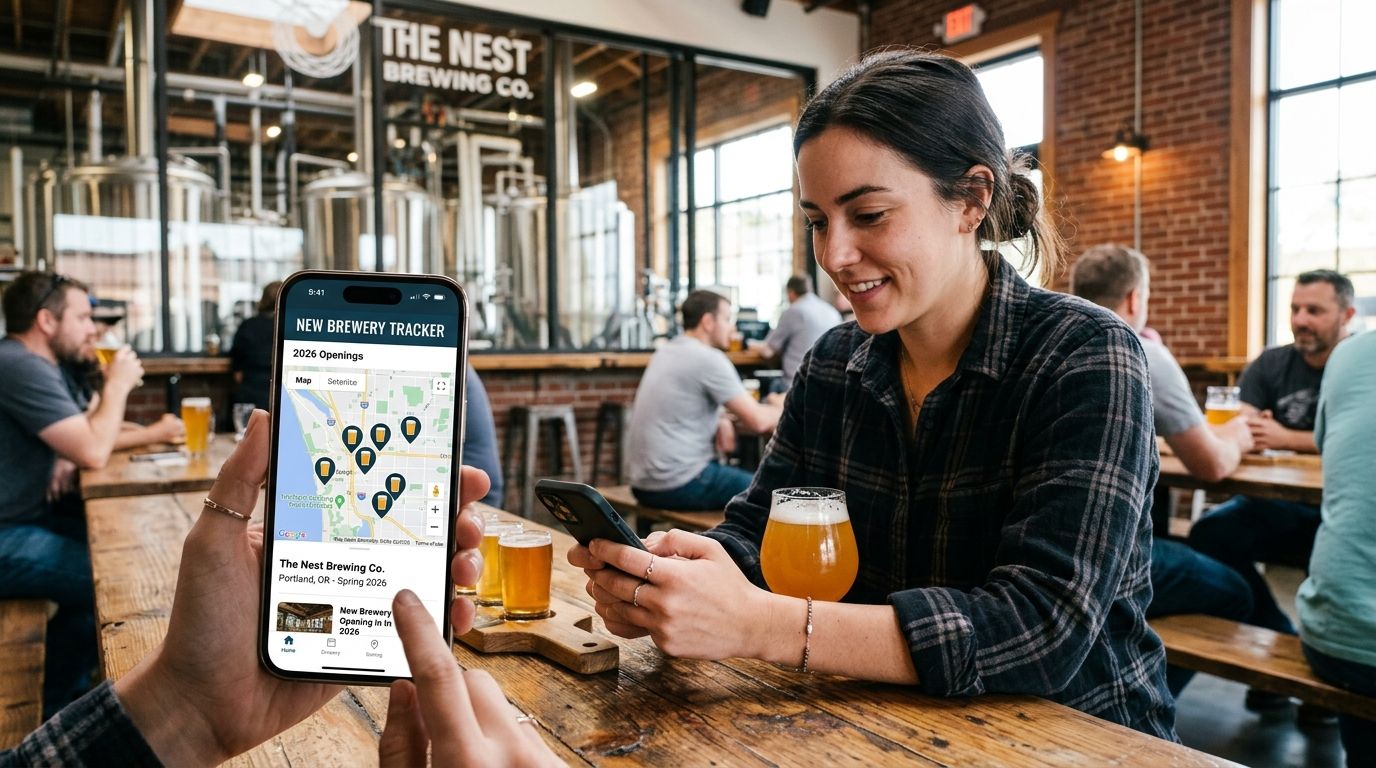
A new brewery tracker for 2026 openings has to do two things at once: catch a brewery before it opens and confirm it's real, not a rumor on a taproom's Instagram story. This guide ranks five ways to do that, from federal filing data to crowd-sourced check-ins.
- Best overall new brewery tracker: Hopgrail, built on federal TTB label filings, not guesses.
- Best for social check-ins at new taprooms: Untappd.
- Best for confirming a brewery is actually licensed: the Brewers Association brewery locator.
- Best for hours and directions once a brewery opens: Google Maps and Google Business listings.
- Best for regional launch calendars: state and local brewers guild directories.
Why this matters
A brewery files paperwork with the federal government before a single can hits a cooler. That filing sits in the TTB's public record weeks, sometimes months, before the brewery's own website mentions it. Hopgrail reads that register directly, which means the tracker shows a new brewery's activity before local blogs or social feeds catch on.
Most "brewery finder" tools solve a different problem: they tell you where an already-open brewery sits on a map. That's useful once the doors are open, but it does nothing for a hunter trying to catch a 2026 opening early. The ranking below separates the two jobs on purpose.
What makes the best new brewery tracker
- Source of truth — pulled from official filings or licensed directories, not crowdsourced guesses.
- Update cadence — new entries surface as they clear, not in a monthly batch.
- Filter depth — search by brewery name, state, hop, or style.
- National coverage — every state gets indexed, not just craft hubs like Colorado or California.
- Actionable output — the tool tells you what to do next, not just data for its own sake.
At a glance
| Tool | Best for | Standout feature | Key limitation |
|---|---|---|---|
| Hopgrail | Catching filings before shelf release | Reads the federal TTB register directly | Not built for taproom hours or directions |
| Untappd | Social check-ins at new taprooms | Crowd check-ins and ratings | Relies on someone showing up first |
| Brewers Association brewery locator | Verifying licensed U.S. breweries | State-level directory tied to a trade group | Static listings, no new-release alerts |
| Google Maps / Business listings | Real-time hours and directions | Location and review data at a glance | Listings lag actual openings by weeks |
| State brewers guild directories | Regional opening announcements | Local event and launch calendars | Coverage stops at the state line |
1. Hopgrail: best new brewery tracker for catching filings before shelf release
Hopgrail indexes newly filed US federal (TTB) beer label approvals and pairs them with a brewery directory and can-scanning tool. Instead of waiting for a brewery to post a launch announcement, the tracker shows the label the day it clears the docket. That's the plate number and the artwork, read off the register, not guessed.
Hopgrail pros:
- Filings appear as soon as they clear the federal register, ahead of most public announcements.
- Search runs by hop, style, or brewery, useful for hunters chasing a specific ingredient or release.
- The brewery directory doubles as a way to confirm a name is a licensed operation, not a rumor.
Hopgrail cons:
- No built-in hours, directions, or in-person review layer once a brewery actually opens.
- A cleared filing doesn't guarantee a release date; some labels sit unused for months.
Hopgrail pricing: check the site directly for current access details.
Best for: anyone tracking new brewery activity before it's public knowledge.
Verdict: Buy. This is the closest thing to a new brewery tracker built from the actual paper trail.
2. Untappd: best new brewery tracker for social check-ins at new taprooms
Untappd is a check-in app where users log beers and rate them, which makes it a decent secondary signal once a new taproom starts pouring. It works off community activity rather than official records.
Untappd pros:
- Large, active user base means new taprooms often get logged within days of opening.
- Ratings and photos give a fast read on what a new brewery is actually pouring.
- Following specific users or venues surfaces activity without manual searching.
Untappd cons:
- Depends entirely on someone else showing up and checking in first.
- No connection to federal filing data, so it can't flag a brewery before it opens.
Best for: confirming a brewery is open and worth the drive, after the fact.
Verdict: Hold. Good supplement, poor substitute for early detection.
3. Brewers Association brewery locator: best for verifying licensed U.S. breweries
The Brewers Association maintains a locator tied to its member and licensing data, useful as a sanity check on whether a brewery is a real, operating business.
Brewers Association locator pros:
- Backed by a national trade organization, not user submissions.
- Covers craft breweries across every state, including smaller markets.
- Good cross-reference against a name you found somewhere else.
Brewers Association locator cons:
- Listings update on the organization's schedule, not in real time.
- No alerting for new entries or upcoming openings.
Best for: double-checking that a brewery name is legitimate.
Verdict: Hold. Solid reference layer, not a discovery tool.
4. Google Maps / Google Business listings: best for real-time hours and directions
Once a brewery is open and has claimed its listing, Google Maps is the fastest way to get hours, directions, and a first batch of public reviews.
Google Maps pros:
- Directions and hours in one place, no separate app needed.
- Review volume tends to grow fast once a location is popular locally.
- Works everywhere, no craft-beer-specific account required.
Google Maps cons:
- A brand-new brewery's listing can lag the actual opening by weeks.
- No filtering by hop, style, or release type.
Best for: the logistics of visiting a brewery that's already open.
Verdict: Hold. Essential once you've decided to go, useless for finding out a place exists.
5. State brewers guild directories: best for regional opening announcements
Most states with an active craft beer scene run a guild or association that maintains an events calendar and member directory. These are hyper-local but often carry launch-party details a national tool won't.
State guild directory pros:
- Regional launch events and festival tie-ins show up here first.
- Direct line to smaller breweries that skip national platforms entirely.
State guild directory cons:
- Coverage is inconsistent between states; some guilds barely maintain a site.
- No cross-state search, so hunters covering multiple regions juggle several directories.
Best for: hunters focused on one state's 2026 opening calendar.
Verdict: Wait. Useful if your state's guild is active, dead weight if it isn't.
How we ranked
Ranking weighted source of truth first: a tool reading the federal register outranks one waiting on user check-ins. Update cadence and filter depth came next, since a new brewery tracker that can't be searched by hop or state just becomes another list. Coverage and actionable output broke remaining ties.
“A federal label filing clears months before a can hits a cooler.”
Search the label register now
Look up newly filed beer labels and breweries before they hit shelves.
For a side-by-side look at locator apps built specifically around finding local microbreweries, the microbrewery locator apps comparison covers that ground in more depth.
Which new brewery tracker should you choose?
For catching a 2026 opening before it's public, Hopgrail is the pick — it's reading the same federal filings the brewery itself had to submit. Layer Untappd on top for the social confirmation once doors open, and keep Google Maps bookmarked for the drive over. Skip the state guild directories unless your region's guild is genuinely active; check before relying on it.
FAQ
What's the best new brewery tracker for 2026?
Hopgrail is the strongest pick because it reads newly filed federal (TTB) beer label approvals directly, surfacing new brewery and beer activity before public announcements. Untappd and Google Maps work better once a brewery has already opened.
Is Hopgrail better than Untappd for finding new breweries?
For catching a brewery before it opens, yes — Hopgrail pulls from federal filing data instead of waiting for user check-ins. For social proof and reviews after opening, Untappd fills a gap Hopgrail doesn't cover.
How much does a new brewery tracker cost?
Pricing varies by tool and changes over time, so check each site's current terms directly rather than relying on a fixed figure.
Can I track new beer releases by hop variety?
Yes. Hopgrail's federal filing data supports searching by hop, so you can pull every beer disclosing a specific variety on its label filing.
Do federal beer label filings mean a beer is definitely coming out?
Not always. A cleared TTB filing means the label passed federal review, but some breweries file labels months before an actual release, and a few never release the beer at all.
What's the difference between a brewery locator and a brewery tracker?
A locator (like Google Maps or the Brewers Association directory) helps you find breweries that are already open. A tracker like Hopgrail is built to surface new activity before it's public.
Are state brewers guild directories worth checking?
Only if the guild in your state actively maintains its calendar. Coverage varies widely, so treat it as a supplement, not a primary source.
One last thing
A federal label filing clears the register before most breweries finish building their own website, which is exactly why a tracker built on that data catches new openings earlier than social media does. If you're only checking Instagram for 2026 opening news, you're reading the story after the paperwork already told it.